
How Our Rigging and Demolition Services Work Together
On certain projects, demolition and rigging go hand in hand.
Removing part of a structure can create the access needed to extract existing plant. Heavy equipment being demolished may need to be supported, lowered or lifted out in sections. New plant may then need to follow the same carefully planned route back into the building.
While they are distinct trades, there are plenty of projects where the success of one scope depends on the other.
At Millennium Rigging, our capabilities across both rigging and demolition allow us to coordinate these works as part of a broader project scope. For builders, mechanical contractors and project teams, this can help simplify the coordination between different stages of complex removal, replacement and upgrade works.
Where Rigging and Demolition Overlap
Demolition may be required to create access for the removal or installation of large plant and equipment, from opening up sections of a building to dismantling existing plant into manageable sections.
At the same time, the demolition process itself can require rigging. Heavy plant, structural elements and other large components may need to be supported, lowered or lifted as they are dismantled, particularly when working within restricted-access or existing building environments.
This means the two scopes often need to be planned together. The demolition sequence needs to consider how materials and equipment will ultimately be removed, while the rigging methodology needs to account for what must happen first to establish a safe and practical lifting or removal path.
For projects involving major plant replacement or building upgrades, demolition and rigging can therefore form different stages of the same carefully coordinated operation.
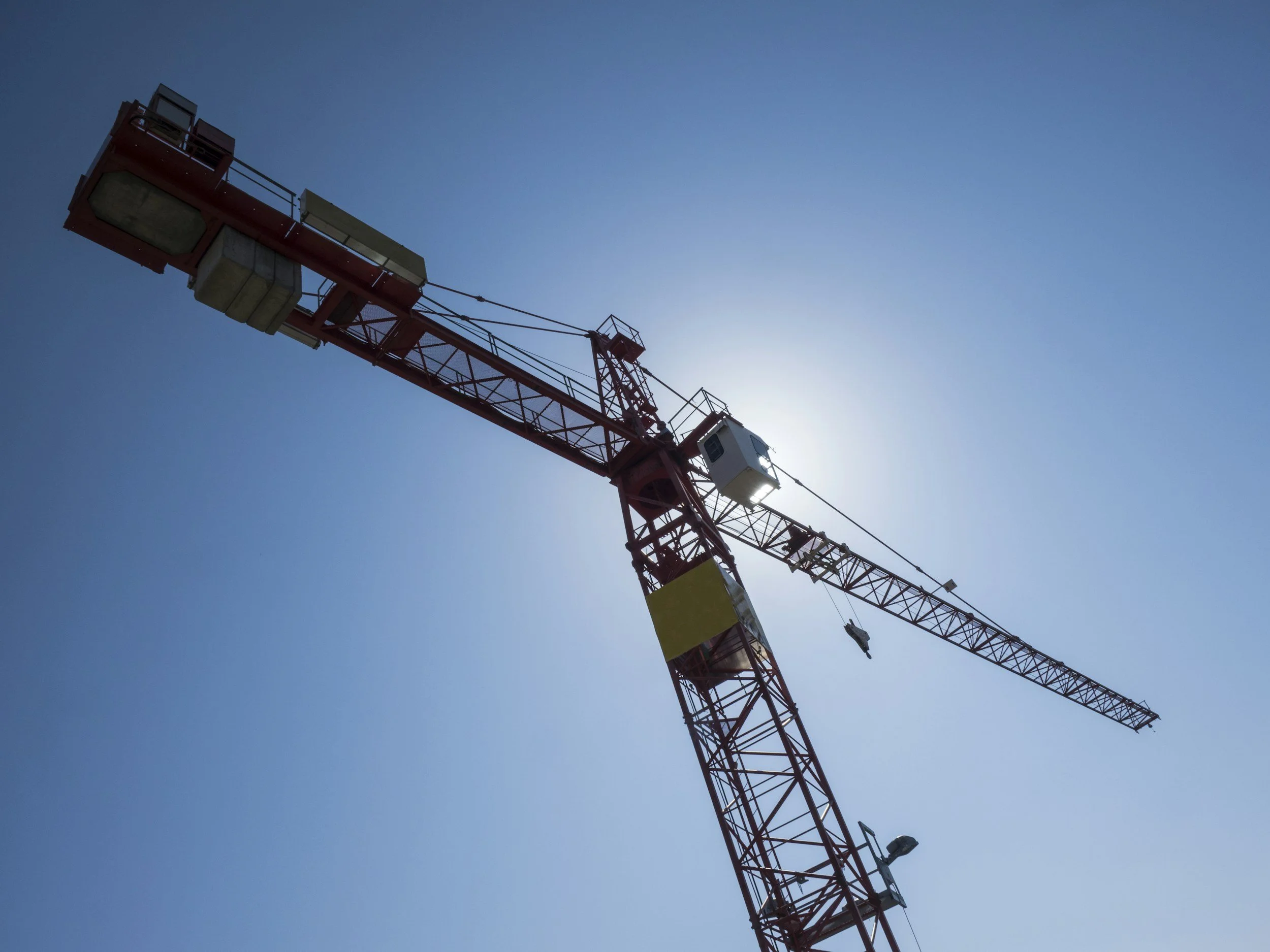
Mechanical plant replacement demonstrates how closely rigging and demolition can overlap.
Before a new chiller, cooling tower, air handling unit or other piece of equipment can be installed, existing plant may first need to be disconnected and removed.
Sometimes there is a clear lifting path. On other projects, the equipment may be located deep within a plant room, on a rooftop or within an area with limited access. The existing equipment may need to be dismantled into manageable sections, or building elements may need to be temporarily removed to establish an extraction route.
Once the old equipment has been removed, the process can effectively reverse to bring replacement plant into position.
This is why planning a plant replacement project needs to address; how is the existing equipment actually getting out?
Sequencing the Works
Where demolition and rigging overlap, sequencing becomes particularly important. A coordinated approach considers the complete project scope rather than each activity independently.
Depending on the job, this may include:
isolating and preparing the work area
establishing access and exclusion zones
completing selective demolition
supporting and dismantling existing equipment or structures
rigging removed components from the work area
completing any required structural or building works
bringing replacement equipment into position
reinstating surrounding building elements where required
The exact sequence will vary considerably from project to project, but the objective remains the same: each stage should create the right conditions for the next.
Rigging and Demolition in Practice: 101 Collins Street
Our work with AG Coombs on the 101 Collins Street Electrification Project demonstrates how multiple scopes can come together on a complex plant replacement project.
The works involved the staged demolition and removal of outdated plant equipment before new systems could be installed. With five-metre-long vessels needing to be transported through a three-metre-wide Gatic opening, the removal process required careful coordination between demolition, rigging and the wider project programme.
The project also extended beyond plant removal. A structural assessment of the existing building identified the need to remove existing roof tiles and install new steel beams to accommodate additional loads.
Working within Melbourne’s CBD added another layer of complexity. Restricted street access required detailed planning to accommodate a 450-tonne slew crane, with a 24-person team of riggers, operators and traffic controllers involved in the operation.
For Millennium Rigging, the project brought together rigging, demolition, engineering and steel fabrication within the one broader scope — a good example of how these capabilities can work together when upgrading major building infrastructure.

Working Within Existing and Live Buildings
The interface between demolition and rigging can become even more important when works are taking place within an operational building.
Access may be limited to particular areas or times. Public areas can require separation from construction activity, while equipment movement may need to take place outside normal operating hours.
Hospitals, shopping centres, offices and other occupied commercial facilities can all introduce different constraints.
In these environments, the methodology needs to consider more than how an element will be demolished or lifted. It also needs to account for what is happening around the work zone while those activities take place.
This can influence everything from demolition sequencing and equipment selection to delivery schedules, crane operations and the route used to move materials through the site.
Planning Beyond a Single Trade
On larger construction projects, there will always be multiple contractors and specialist trades involved.
However, where scopes are closely connected, reducing unnecessary handovers can make coordination more straightforward.
Where appropriate, Millennium Rigging can deliver demolition and rigging as part of an integrated scope, with our capabilities also extending to structural steel and associated building works.
For builders and mechanical contractors, this means related works can be considered together from the outset rather than treated as completely separate activities.